
In today’s digital-first world, a professional website is one of the most important assets for any business. Whether you run a small company, a growing startup, a manufacturing unit, an educational institution, a government organization, or a service-based business, your website often creates the first impression of your brand.
A well-developed website can help you present your services, generate enquiries, communicate with customers, build credibility, and support your long-term digital growth.
However, choosing the right website development company is not always easy. There are many companies offering website design and development services, but their expertise, technology, support quality, security practices, and long-term capabilities may vary significantly.
Here are the most important factors you should consider before selecting a website development company for your business.
1. Understand Your Website Requirements First
Before contacting a website development company, clearly identify what you expect from your website.
Your requirement may be for:
- Corporate website
- Business website
- Product or service website
- E-commerce website
- Customer portal
- Dealer or distributor portal
- Educational website
- Government or institutional website
- Membership website
- Lead generation website
- Custom web application
- Content management system
- Online booking or registration portal
Also consider whether you need additional features such as online payments, customer login, WhatsApp integration, enquiry forms, CRM integration, APIs, reports, or mobile application connectivity.
When your requirements are clear, it becomes easier to select the right technology partner.
2. Check the Company’s Experience
Experience plays an important role in website development.
An experienced development company is more likely to understand different business requirements, technical challenges, hosting environments, browser compatibility, mobile responsiveness, security, and scalability.
Before making a decision, check:
- How long the company has been working in web development
- Types of websites they have developed
- Industries they have worked with
- Their understanding of business applications
- Their technical development capabilities
- Their experience with hosting and server management
A company with diverse project experience can often provide more practical solutions.
3. Review Their Website Development Portfolio
A portfolio gives you a better understanding of the company’s actual work.
Review some of their completed websites and check:
- Overall design quality
- Mobile responsiveness
- Navigation structure
- Loading speed
- User experience
- Content presentation
- Professional appearance
- Industry relevance
Do not evaluate a development company only based on attractive graphics.
A good website should also be functional, easy to navigate, fast, secure, and suitable for the target audience.
4. Check Whether They Provide Responsive Website Development
Your website should work properly on desktops, laptops, tablets, and smartphones.
Today, a large percentage of users access websites from mobile devices.
A responsive website automatically adjusts its layout according to the screen size.
Your website should have:
- Mobile-friendly navigation
- Readable text
- Properly sized buttons
- Responsive images
- Fast-loading pages
- Easy-to-use enquiry forms
- Optimized mobile layout
Mobile responsiveness should be a standard part of modern website development.
5. Understand the Technology They Use
Technology plays an important role in website performance, security, flexibility, and future scalability.
Ask the development company about the technologies they use.
Depending on the project, these may include:
- HTML5
- CSS3
- Bootstrap
- JavaScript
- PHP
- MySQL
- React
- APIs
- CMS platforms
- Progressive Web Apps
- Cloud infrastructure
The right technology should be selected based on your actual business requirement rather than simply following current trends.
6. Ask About Content Management
Businesses frequently need to update their website after launch.
You may want to add:
- New services
- New products
- Blog posts
- Images
- Testimonials
- News
- Team members
- Contact information
- Offers
- Downloadable files
Ask whether the website will provide an admin panel or content management system.
A good CMS can help your team manage regular website content without depending on a developer for every minor change.
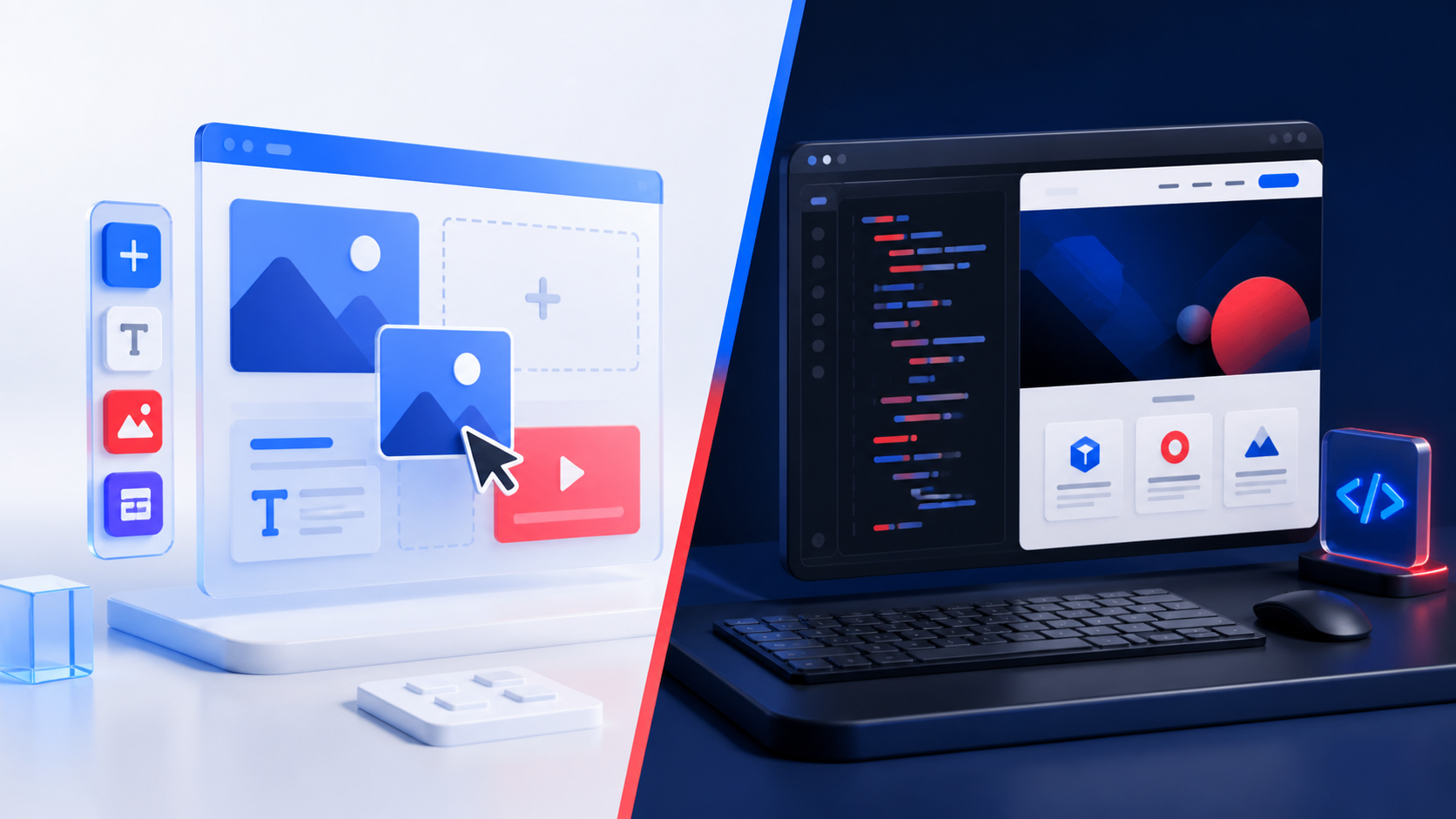
Some website development companies also provide drag-and-drop website builders that allow users to visually create and modify pages.
7. Website Speed Should Be a Priority
Website visitors expect pages to load quickly.
A slow website may lead to a poor user experience and visitors may leave before exploring your services.
Website speed depends on several factors, including:
- Development quality
- Image optimization
- Database performance
- Hosting server
- Caching
- JavaScript and CSS optimization
- Third-party integrations
Ask your development company how they approach performance optimization.
8. Security Must Be Considered from the Beginning
Website security should never be treated as an optional feature.
Business websites may contain contact forms, customer information, login systems, databases, or other sensitive information.
Important security measures may include:
- SSL certificate
- HTTPS
- Secure login system
- Strong password policies
- Database security
- Input validation
- Access control
- Firewall protection
- Malware scanning
- Backup systems
- Regular software updates
For custom web applications, security should be considered throughout the development process.
9. Ask About Web Hosting
A website cannot perform properly without reliable web hosting.
Many businesses focus only on website design and ignore hosting quality.
Reliable hosting can help improve:
- Website speed
- Server stability
- Uptime
- Security
- Backup availability
- Email reliability
Ask the development company whether they also provide web hosting, VPS, cloud servers, or dedicated servers.
Working with a company that handles both website development and hosting can make technical support easier.
10. Check Their Backup Policy
Website backups are extremely important.
Unexpected problems can occur because of:
- Malware
- Server failure
- Accidental deletion
- Software errors
- Incorrect updates
- Database corruption
Ask how frequently backups are created and how long they are retained.
Ideally, businesses should have both website file backups and database backups.
11. Understand SEO-Friendly Website Development
Search Engine Optimization should be considered during website development.
A technically SEO-friendly website should support:
- SEO-friendly URLs
- Page titles
- Meta descriptions
- Heading structure
- Image ALT text
- Sitemap
- Robots.txt
- Mobile responsiveness
- Fast loading
- Clean HTML structure
While website development alone cannot guarantee search engine rankings, a properly developed website provides a strong technical foundation for SEO.
12. Check Their Understanding of Website Security and Malware Protection
Cybersecurity threats are becoming increasingly common.
Websites may be targeted by automated bots, malicious scripts, malware, spam, or unauthorized login attempts.
Ask whether the company provides:
- Malware scanning
- Firewall configuration
- Website monitoring
- Security updates
- Server hardening
- Website cleanup services
- Backup restoration
A company that understands both development and security can provide stronger long-term support.
13. Ask About Scalability
Your business may grow in the future.
Your website should be capable of expanding along with your requirements.
Future requirements may include:
- Customer login
- Online ordering
- Payment gateway
- Dealer management
- CRM integration
- Mobile apps
- API integration
- Reports
- Workflow automation
- Multi-language support
- Additional website sections
A scalable website architecture can help reduce the need for complete redevelopment later.
14. Check Support After Website Launch
Website development does not end when the website goes live.
After launch, you may require support for:
- Content updates
- Hosting
- DNS changes
- SSL
- Backups
- Security
- Website errors
- New features
- Server migration
- Domain renewal
Ask about the company’s post-launch support policy.
Reliable technical support can save considerable time when website-related issues occur.
15. Check Their Communication Process
Good communication is extremely important during website development.
The company should clearly explain:
- Project scope
- Technology
- Deliverables
- Development process
- Content requirements
- Testing process
- Hosting requirements
- Support terms
- Additional development charges
Clear communication helps avoid misunderstandings during the project.
16. Do Not Choose Only Based on the Lowest Price
Website development pricing can vary significantly.
The lowest quotation may not always provide the best value.
A very low-cost website may compromise on:
- Security
- Hosting quality
- Support
- Performance
- Customization
- Scalability
- Design quality
Instead of comparing only prices, compare the complete solution being offered.
Consider the quality of development, technology, hosting, support, security, and long-term reliability.
17. Look for a Complete Technology Partner
For many businesses, working with one technology provider for multiple services can simplify IT management.
A complete technology company may provide:
- Website development
- Custom web applications
- Drag-and-drop website builder
- Domain registration
- Web hosting
- VPS hosting
- Dedicated servers
- Business email
- SSL certificates
- Website security
- Malware protection
- Backup solutions
- Government IT-related solutions
- Software development
- Mobile applications
This can reduce the need to coordinate with multiple vendors.
Questions You Should Ask Before Finalizing a Website Development Company
Before selecting your development partner, ask the following questions:
- How many years of website development experience do you have?
- Can I see examples of your previous projects?
- Which technologies will you use?
- Will the website be mobile responsive?
- Will I receive an admin panel?
- Can I update website content myself?
- Is SEO-friendly development included?
- What security measures will be implemented?
- Who will manage hosting?
- Are backups included?
- What support is available after launch?
- Can the website be expanded later?
- What is included in the quotation?
- Are there any recurring charges?
These questions can help you make a more informed decision.
Conclusion
Choosing the right website development company is an important decision for your business.
A professional development partner should offer more than an attractive design. They should understand technology, security, hosting, performance, scalability, content management, and ongoing support.
Take time to evaluate the company’s experience, portfolio, technical capabilities, support process, and long-term reliability.
A well-developed website can become a powerful digital platform that supports your business for many years.